Kark Group’s work on urban ecology and conservation has had a substantial contribution to this fast growing scientific area studying biodiversity and ecology in urban areas, reflecting the expanding urban landscapes. Since 2008, more than half of the world human population lives in cities. In this framework, our research on urban birds has contributed to understanding the factors shaping the biodiversity remaining in urban environments and alien species in urban landscapes.
Urban landscapes provide a useful model for testing how species respond to changing environments. While many species disappear from urban areas, others are very successful in cities, contributing to a process termed ‘biotic homogenization’. Our research has contributed to gaining a better understanding of what traits are needed for succeeding in urban landscapes. Additionally, we tested hypotheses about biodiversity patterns of birds and their changes along urban gradients, linking to our research about invasive alien species. Many successful invasive birds are urban exploiters, and our work was one of the first to suggest which bird species may be candidates for exploiting urban landscapes and becoming successful invaders, thus enabling future research and policy advice on which species to exclude. In further work, applying state-of-the-art remote sensing tools, we found that satellite-derived indices of levels of urbanization correspond strongly with urban bird richness. This allows us to study large areas that are hard to access, but can be investigated using satellite images and remote sensing tools. These advanced spatial tools will be increasingly used and our work has provided important evidence of their ability to provide useful tools for future scientific work in both natural and urban environments at both local and global scales (see Kark et al. 2008 for discussion on the importance of discussion and collaboration between space agencies, decision makers, remote sensing experts and ecologists across the globe towards maximizing the gain from satellites for environmental and conservation-related purposes).
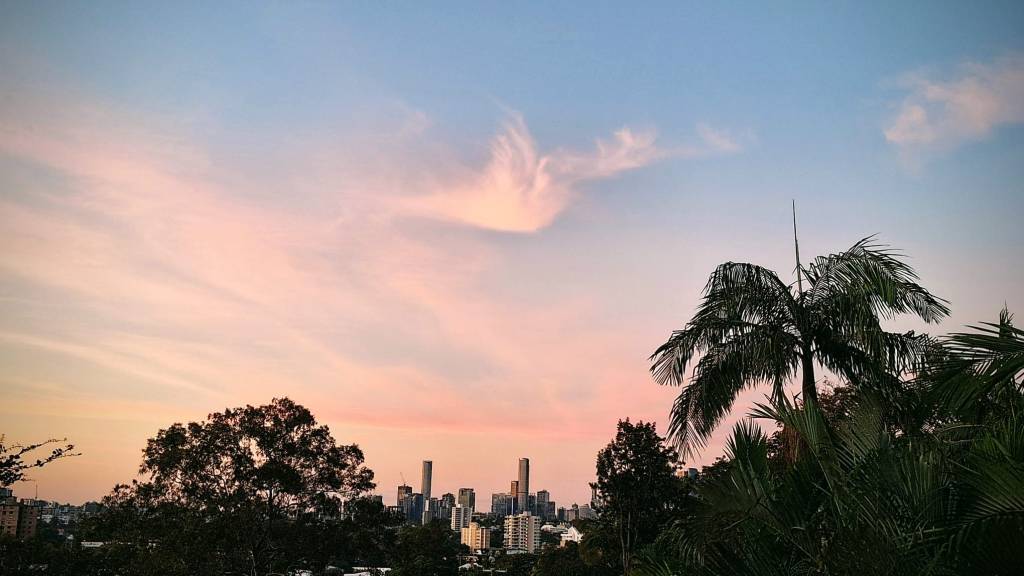
Photo credit: Salit Kark
